
Research
What morphological features shared in different marine invertebrates can be traced back through evolution?
In our laboratory, we explore this question using a unique microscopic technique that allows us to look from whole animals down to the architecture of a single cell; all within a single sample. This is made possible by the isCLEM method (interleaved serial-section Correlative Light and Electron Microscopy), a combination of alternating ultrathin section images from light microscopes and transmission electron microscopes, which reveal the ultrastructure within each cell, developed by PD Dr. Thomas Stach. This method allows us to cover a remarkable range of scales. Using this unique technique, we create highly precise 3D models of whole marine micro-organisms – but at the same time we can also zoom in on individual organ systems and the fine structure of individual cells.
Our working method
-
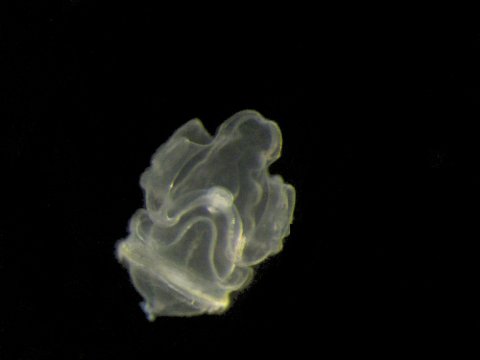
Appendicularians
1–10 mm in size, these planktonic animals live in all oceans from the surface to a depth of 1000 m, using their complex mucus feeding houses and endostyle to filter food out of the water.
-
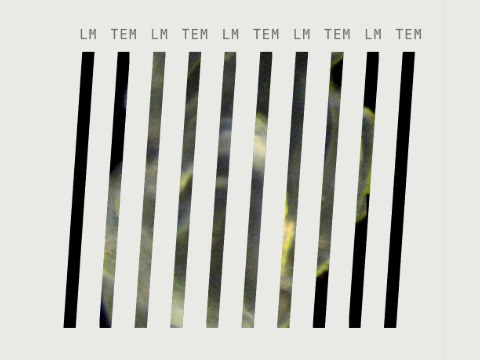
isCLEM
Revealing the ultrastructure within the organism and cells by a combination of alternating semithin and ultrathin section images for light microscopes (LM) and transmission electron microscopes (TEM).
-
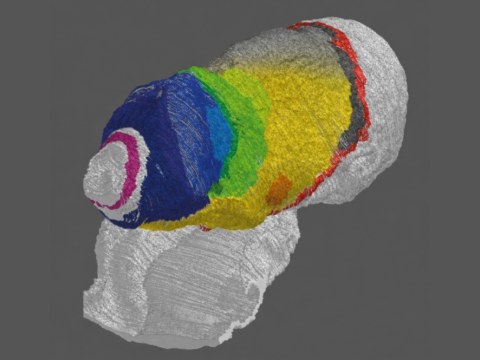
3D models
High-precision 3D models to investigate morphological and cellular features.


Our work focuses on the morphological evolution of marine invertebrates, particularly Appendicularia, a group of animals that, despite their small size, plays a crucial role in the ocean’s carbon cycle. Appendicularia live in their so-called ‘houses’, which serve as filtration systems for feeding. If these become blocked or are damaged, they can leave them and form new ones up to 20 times a day. The empty appendicularian houses then sink as part of the “marine snow” and thus transport carbon to deeper layers of the ocean, where it is stored. In some cases, more than 80 % of the carbon leaving the upper water layers originates from the production of appendicularians.
Our research priorities include comparative zoology, the evolution of complex life cycles, neurophylogeny, cell lineage analyses, and the structure and function of biogenic materials.